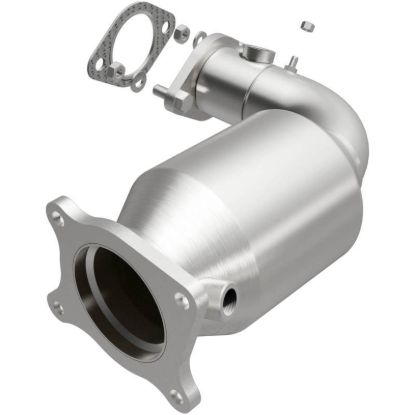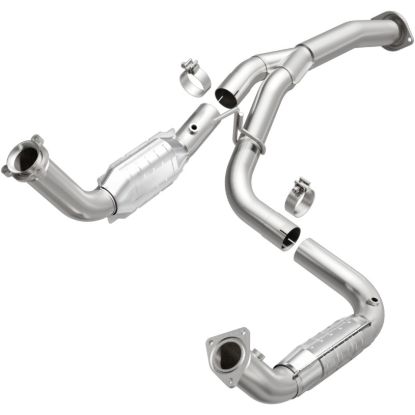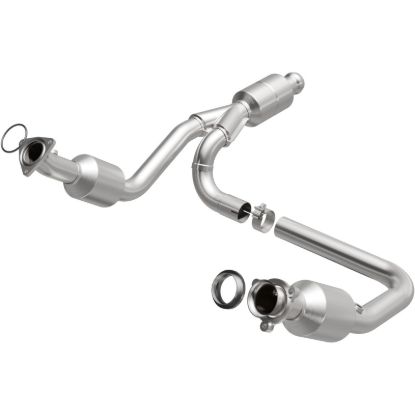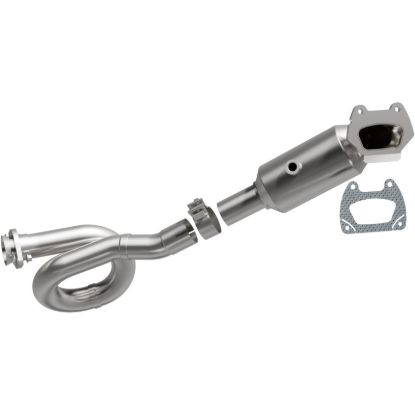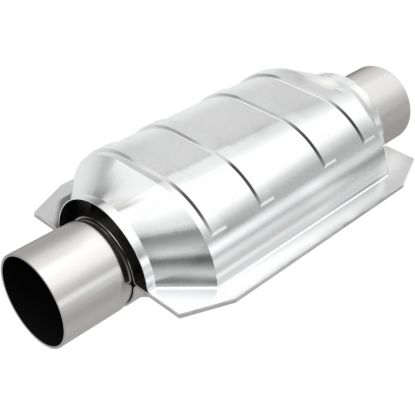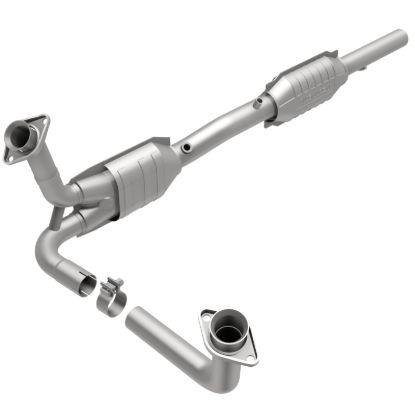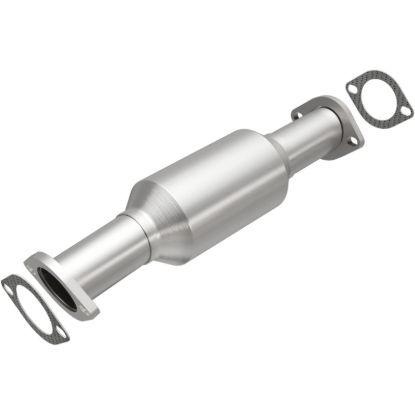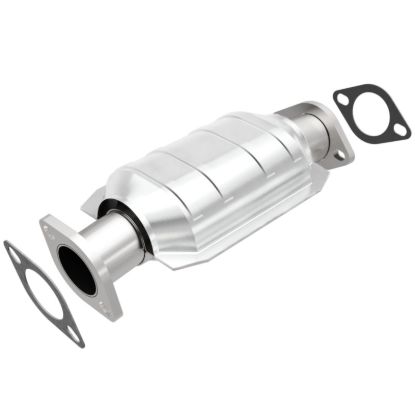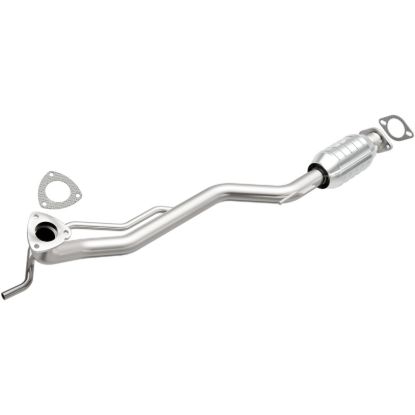

3in. x 7in. Long Kooks GREENCATS Convert
kshGE-90147
Kooks Universal 3 Inch GREEN Catalyst 7.5 Inch Length 400 cell
495,99 € excl. VAT
Is your original catalytic converter clogged, does it rattle inside, or does it need replacing in a project with new piping? This category brings together direct-fit catalytic converters for specific cars and universal models that are welded into the exhaust. The parts are for you if you want to clean the exhaust gas without unnecessary back pressure.
The catalytic converter converts part of the harmful substances in the exhaust gas before the gas reaches the silencers. Inside, there is typically a core with many fine channels coated with precious metals. The cell count, e.g. 400 cells in one of the universal models, affects both cleaning and flow, so the choice is always a trade-off. The catalytic converter sits between the exhaust manifold or headers and the rest of the exhaust system.
Start by deciding whether you need a direct-fit or a universal model:
In addition to MagnaFlow, you will find aFe, HKS, Remus and Flowmaster, among others, in this category.
A universal catalytic converter typically requires fitting with pipes and flanges as well as sturdy clamps or welding. Make sure the oxygen sensors are positioned correctly, otherwise the engine management may report faults. Whether the catalytic converter can be approved for road use depends on the product and the car, so check the approval, e.g. E-mark, for the specific part number. If the core rattles or performance drops, the catalytic converter may be clogged or damaged.
A direct-fit catalytic converter is made for specific cars and is mounted in the existing hangers and flanges. A universal model must be welded in and adapted to the pipe diameter and the space under the car.
It depends on the product and the car. Check the approval, e.g. E-mark, for the specific part number before you install it. A catalytic converter made for other markets is not necessarily approved in Denmark.
It may be because the oxygen sensor after the catalytic converter measures a different cleaning efficiency than expected, or because the sensor is positioned incorrectly. It depends on the car and the catalytic converter, so check the position and fault codes.
Typically misfires, unburned fuel or oil in the exhaust, which can overheat or clog the core. Impacts from the road surface and vibrations can also crack the core so it starts to rattle.